In my last blog post I discussed the egg retrieval process and the procedure to preserve my fertility in case my cancer treatments permanently force my body into menopause. As I previously stated, the process for me was mentally and physically challenging. It was also the initial step towards treatment that made my cancer diagnosis seem real.
What is Cold Cap?
Cold Cap is the process of cooling the scalp during chemotherapy to minimize or reduce hair loss due to chemo.
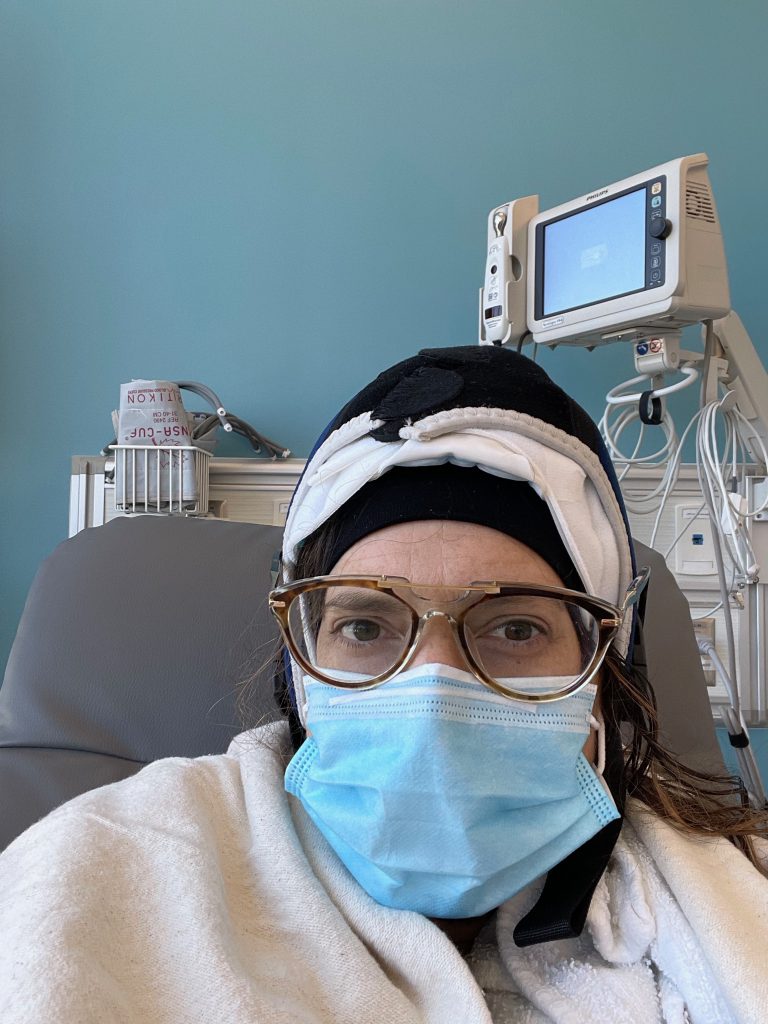
I decided that I would try Cold Cap during my chemotherapy treatments. In this post I will discuss the options that were available to me and a brief overview of what the process looks like.
The theory around Cold Cap or scalp hypothermia is that the cooling process tightens and constricts the blood vessels in the scalp. The constriction of the blood vessels reduces the amount of chemo that reaches the cells of the hair follicles. The cold also decreases the activity of the hair follicles which makes it less attractive to chemo, as it targets rapidly dividing cells.
The goal of both is to basically keep your head/scalp at 37 degrees Fahrenheit. This basically freezes your hair follicles which prevents the chemo from reaching the follicles and helps to limit loss of hair. Preventing the impact on the hair follicles also helps keep them healthy for hair regrowth. Cold Cap does not work well with all chemotherapy treatments, so you should talk to your oncologist about the options. To learn more about cold cap I have included an article from the Mayo Clinic.
Alternative Cold Cap Treatments
Since my chemotherapy and treatment is at UCSF, I was given two options of companies that use cold cap. It will depend on at what hospital you receive chemotherapy and the options they may have available. UCSF had 2 types of caps, the Penguin and Delta.
I will share a brief summary of both to give a bit of background on this process. Chemo will weaken and thin hair no matter what, and the reality is you may lose your hair even with Cold Cap. The efficacy for both options is about 80%, meaning that 80% of the women that used the caps had reduced hair loss. The statistics are still very vague, however, as this concept is fairly new. The efficacy of the Cold Cap procedure seems to be very individual, similar to most aspects of cancer treatments. I know some people who lost a lot of their hair even using the Cold Cap and ended up with bald patches.
Both come at a price, typically out of pocket, but there are programs that provide a decent discount toward the initial cost. One of the discounted programs I used was called Hair to Stay, I have included the link to their direct website. The Penguin Cold Cap cost is $450/month to rent. That does not include all of the dry ice and cooler. The send you the caps, protected gloves (for placement and removal), and a digital thermometer.
DigniCap Delta is $325/infusion for 8 infusions ($275 due to Dignitana and $50 to UCSF each session), and and a one time cost of $250 to Dignitana for your cap and kit. For Delta, once you pay the initial cost (likely, $1,000-$1,500 depending on the institution), you will be sent the kit, which includes a cap, brush and spray bottle and bag. These will all be used each time you have chemotherapy. Before each treatment you pay $50 dollars which is put on a card that goes into the machine. The machine is then calibrated to your particular chemotherapy regime.
Cold Cap Choices – The Penguin Option
The Penguin is much more labor intensive compared to the Delta. The Penguin cap has to be kept in a cooler (which you supply and bring with your own dry ice) and has to be changed every 20-30 minutes so that it doesn’t get too warm. As the patient, you are not allowed to change the cap on your own, and you would have to train a parent or friend.
Trainings for the Penguin procedure were via Zoom as this was in the midst of the COVID pandemic. The medical assistants at UCSF were not trained in the Penguin cap, so they were not able to help. The Penguin cap has to be worn 4-6 hours AFTER the chemo in addition to wearing it, and changing it, throughout the entire time of chemo. Hearing all of that was enough for me to say, no thanks, let’s talk about the other option. Here is a link to learn more about Penguin cold caps.
The Cold Cap Choices – The Delta Dignicap
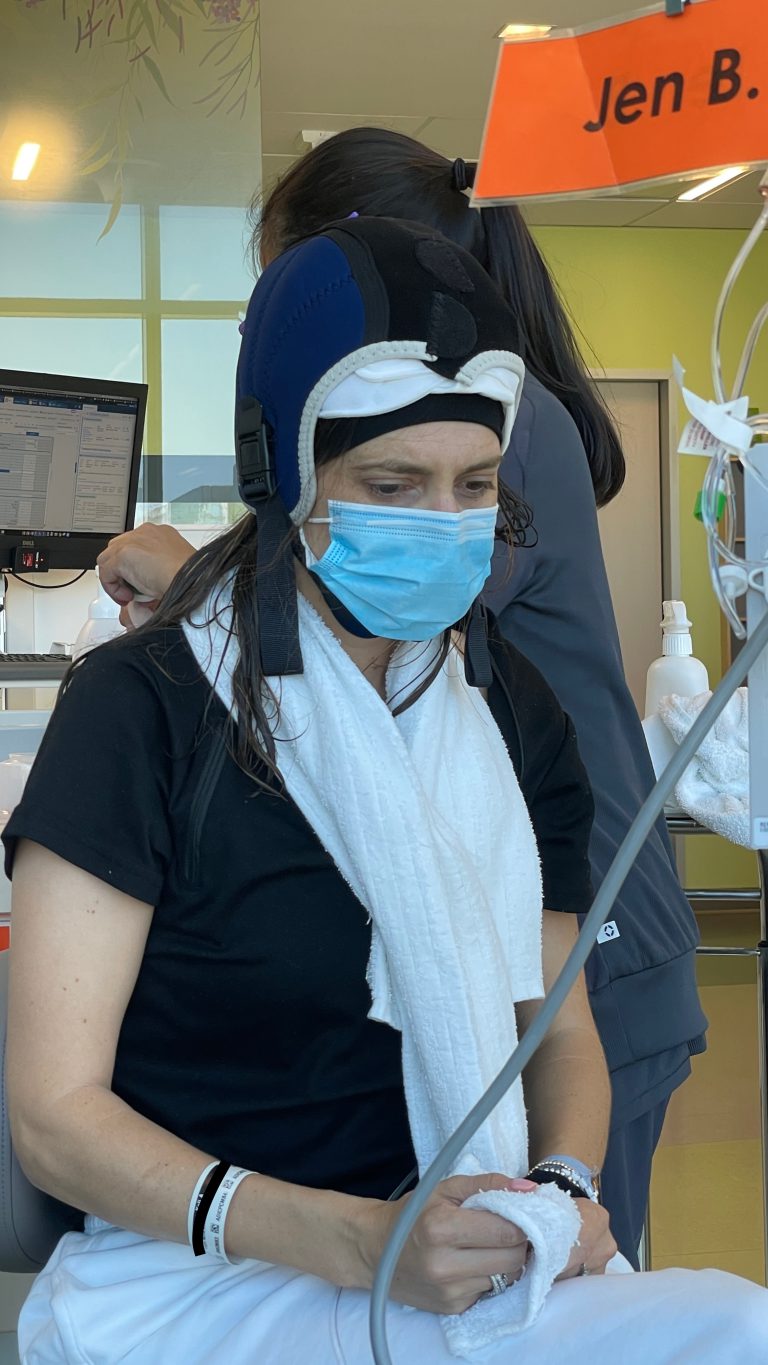
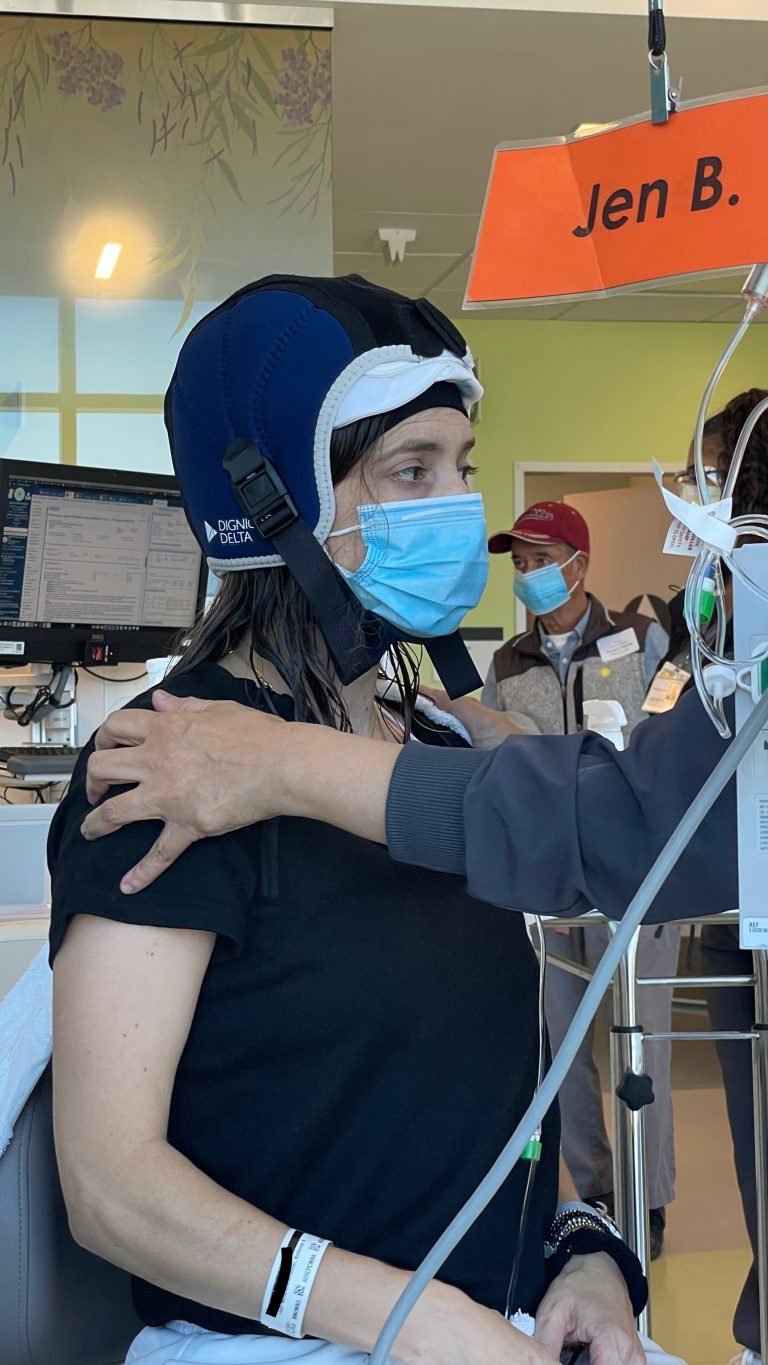
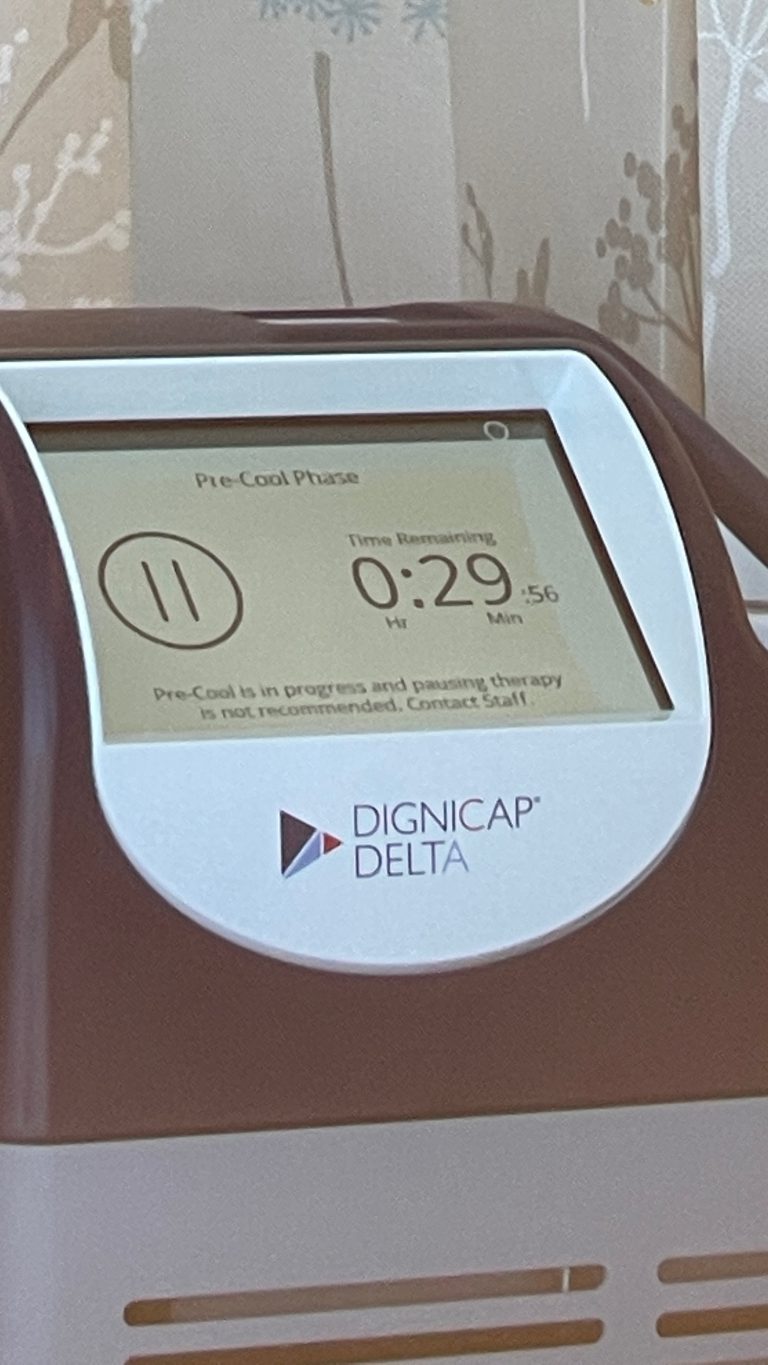
The Delta cap comes with a machine that continually keeps your head at 37 degrees Fahrenheit. Delta (DigniCaps Delta) work by pushing coolant through a cap that sits on the head, with a neoprene cap on top to secure and insulate it. These caps are attached to a machine in the infusion center. You are connected to this machine starting 30mins before chemo, through the entire chemo treatment and then two hours after. The machines are on each infusion floor at UCSF. You can get up and go to the bathroom, but you can only be off the machine for 10 minutes, as you can’t let the cap become warm.
With this procedure, I was able to leave the hospital and go home without any more cooling needed, and I did not have to haul a cooler with me or have someone change my caps every 20-30 minutes. The Dignicap does add time onto your chemotherapy treatments, the majority of which is to allow your head to come back to room temperature without having frost bite or hypothermia. The warming up phase took 2 hours for me. Here is a link to learn more about Delta Dignicap from their website.
I chose Delta Dignicap
I decided I would give the Delta Dignicap a try and see how it went, while maintaining an open mind that it may not work for me. I knew based on the reviews by others that it can be very painful and also add extra time staying in the infusion center. I figured if it made the chemo infusions more miserable or painful I would not do it. I did not have high expectations since the reviews and statistics varied.
Typically hair loss will be most noticeable within the first 3 chemotherapy sessions. For those who don’t use Cold Cap by the second or third session you would likely be completely bald. I did not find the use of the cold cap unbearable and stuck with it through my chemo treatments. I initially had very thick hair and lost what I estimate to be 15-20% of my hair throughout my 6 chemotherapy sessions. My hair became very thin and weak and didn’t start to regrow until about 6 months after treatment.
Change of Hair Care & Favorite Products
It is very important to follow all the strict protocols when using the Cold Cap. I washed my hair once a week, typically the night before my chemotherapy. In the shower, I noticed the most hair loss, especially after the third chemo treatment.
I only used baby shampoo as it was very gentle and didn’t contain any harmful chemicals. I highly recommend using Aveeno baby shampoo. The scalp can become itchy so using clean and sensitive shampoos are helpful. I also added a little bit of Aveeno Oat Milk conditioner with the shampoo to help keep my scalp moisturized. I was also given a small “Wet” hair brush with small flexible bristles that reduce the amount of tension when brushing your hair.
During this process, I did not use any hair care products or use a blowdryer, curling iron or straightener. I also used silk or satin soft hair ties and silk or satin pillow cases. The pillow cases were amazing as they also stayed fairly cool throughout the night which helped with my hot flashes. The goal of these pillow cases is also to limit the pulling of hair throughout the night, therefore reducing hair loss. I know this process may seem like a lot, but I found out that it you follow it carefully, it really makes a difference.
Are there Side Effects?
The side effects for both cold caps are headaches, feeling like a “brain freeze” and potentially, mind numbing pain. The initial 15 minutes of the cap being on my head was the hardest, but after that my head was numb. They had to throughly wet my hair before placing the cap onto my head, which made it feel even colder.
Once the Cold Cap was placed, the medical assistant would tape it tightly to my head. Research has shown that if the cap is not tightly placed on the head, there is an increase in hair loss or patches where contact to the scalp is not as strong. I did not find the process unbearable, but many do find the cooling very painful. Taking Advil before really helps to take the edge off.
There was no better feeling than finally being able to take the Cold Cap off once my head returned to room temperature. I would usually bring a beanie to wear on the way home to keep my head warm.
Stay Tuned
Thank you all for continuing to follow along my cancer treatment journey. The process in this phase becomes very real. My next blog post will be about my specific chemo regimen.